
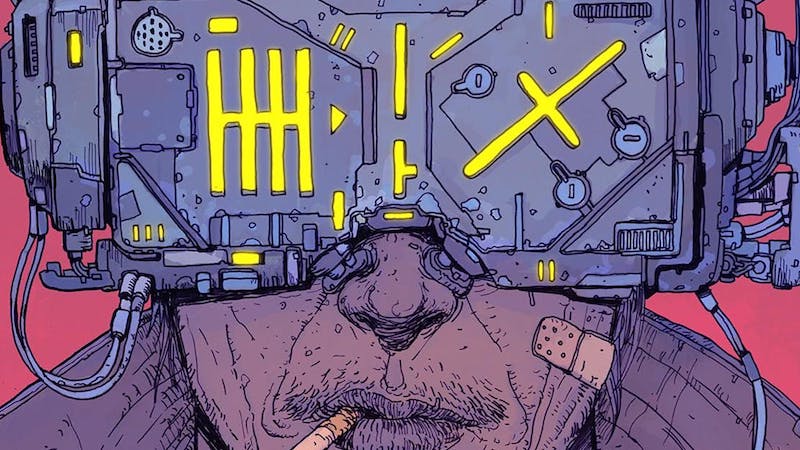
Before we get started, we have to understand what cyberpunk is. According to Wikipedia, Cyberpunk is a combination of the words “cybernetics" and “punk." It’s mostly based on the “Combination of Low life and High tech," where the prevalence of advanced science and technology is contrasted with a somewhat broken social structure; the plot is often framed in terms of a social order that is highly controlled by the government or by mega-corporations or secret organizations, and where the characters take advantage of the loopholes to do things they can’t afford to do without it.
When we appreciate cyberpunk stories, we are not only attracted by the characters and plots but also by technology and lifestyle. As modern philosophy gradually develops, critics’ eyes have steadily shifted away from structure, plot, characters, or background and have turned their attention to non-living things. Object-Oriented Ontology was born, dedicated to exploring the reality of non-human and non-living entities. It reject’s human-centered thinking and behavior. According to OOO’s understanding, everything is an object, whether biological, non-biological, artificial, or conceptual.
So, in this blog, I want to discuss the common objects in cyberpunk culture, use the core ideas of OOO, and understand what these objects are trying to say and what they reflect in the young culture of cyberpunk. I want to divide these objects into two parts according to the most famous characteristics of cyberpunk: Tech and Life.
High Tech
For all science fiction novels, the setting of new technology is paramount, and the cyberpunk worldview has its technological features.Cyberpunk is a subgenre of science fiction in which technology plays a central role in shaping the world while driving narrative. These capabilities often include advanced computing, artificial intelligence, virtual reality and the Internet. These technologies are integrated into daily life.
Cyberspace
The most famous of these technology is the concept of Cyberspace. Created by William Gibson, it first appeared in his Neuromancer novels. In the story, the protagonist, a cyber cowboy, Case, can make neural connections through the console and enter the world of virtual networks to carry out hacking operations. This so-called cyberspace represents a virtual, digital space where people can interact with the Internet, data transfer, and virtual reality experiences.
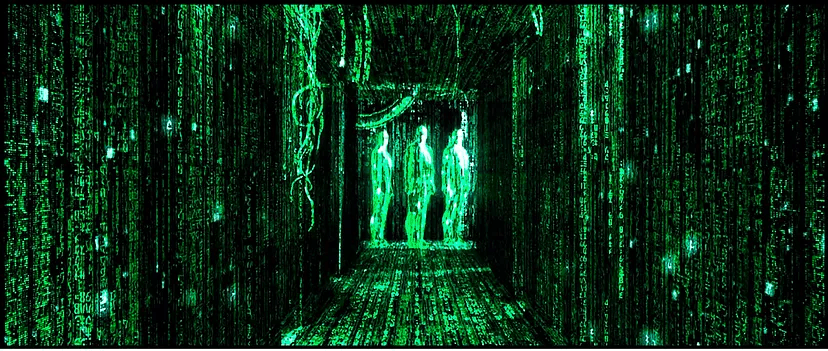
One of the most famous examples is the Matrix. In the story, computer machines have taken over the natural world. In order to cultivate human beings as a source of energy, the computer machine created a virtual reality world by simulating the human world in 1999 (the real world entered the year 2199 or so). Using a neural link with the human brain, the signals of sight, sound, smell, taste, execution, psychology, and such on, are transmitted to the human brain as if they were real, thus imprisoning the human mind.
There is an ongoing debate about whether or not cyberspace is a space. The controversy over whether we see cyberspace as a separate entity and not just a tool created and controlled by humans that must be linked to humans is still being discussed. From an OOO perspective, we should separate cyberspace from human control. It has its autonomy and can exist as an independent space.
The theory of cyberspace as a space is traditionally divided into different positions of “cyberspace" and “real space". However, this division is too simplistic and ignores how theories about the nature of cyberspace are both normative and performative.
Initially, cyberspace was seen as an ideal space separate from real space. In this theory, the network is viewed as a separate realm whose rules differ from the real world’s. Utopians believe cyberspace should be a free space that transcends national boundaries and legal constraints. Over time, people began to realize the reality of cyberspace, a space with its own rules and restrictions, but not wholly independent of real space.
Although isotopian theories gradually replaced utopian ideals, utopians played an essential role in constructing cyberspace as an independent space. Utopians believe cyberspace should be autonomously governed by its members and transcend physical space and real-world national sovereignty. Although these ideals have been criticized somewhat as naive and essentialist, utopians are considered revolutionary. They seek to create a new space within the clutches of history, a more accessible and open cyberspace.
Artificial Intellegence

The topic of artificial intelligence has been popular in various science fiction novels, not just cyberpunk novels, but I want to discuss it in a different way. 1950s, the famous science fiction novel “I, Robot" series appeared, and he also proposed the Three Laws of Robotics.
- A robot may not injure a human being or, through inaction, allow a human being to come to harm.
- A robot must obey orders given it by human beings except where such orders would conflict with the First Law.
- A robot must protect its own existence as long as such protection does not conflict with the First or Second Law.
The database built by artificial intelligence is large enough that it should have no problem communicating and dealing with situations like humans. Basic ethical behaviors can probably be implemented appropriately according to the environment and society in which they are located.
But when we try to explore the moral concepts of AI or machines, or whether they can be regarded as living things, an object created by humans can be out of human control, and we should look at it after separating it from humans. When we discuss whether machines and artificial intelligence have human nature, we still regard artificial intelligence as a kind of human-like machine. We look at our creations with God’s eyes, let them imitate us, and try to copy a perfect human. But, from another perspective, the meaning of the existence of artificial intelligence is to form something different from humans. They can accomplish things that humans cannot achieve, and they can also exist independently of humans.

In the famous cyberpunk novel Do Androids Dream of Electric Sheep?, the latest Nexus-6, viewed from a brutally pragmatic perspective, has already surpassed some humans in evolution. However, an android, no matter how good, cannot pass the empathy test. One of the plots in the book is that the characters in the story visit Fisherman’s Wharf in San Francisco. They are hungry and walk into a seafood restaurant and one of them orders lobster. The chef throws the lobster into a bucket of boiling water before them, asks the test subject what he thinks, and records his various indicators. In fact, for the test results, the test subject’s verbal evaluation is insignificant. The actual judgment of whether the test subject is human is to measure the uncontrollable pupil changes and capillary reactions of the human body itself. If these indicators show that the test subject sympathizes with the lobster, it can be determined that the test subject is human.
As humans, we have always emphasized that we have empathy and humanity that machines do not have. Still, from the perspective of biological evolution, these things may be shortcomings, and whether we should impose these issues on machines becomes a question. Instead of letting machines rely on humans for development, we should let them go with the flow. Human nature is the biggest stumbling block to the advancement of artificial intelligence because we will feel fear and anxiety, afraid of things that are too similar to humans but have capabilities that exceed human capabilities.
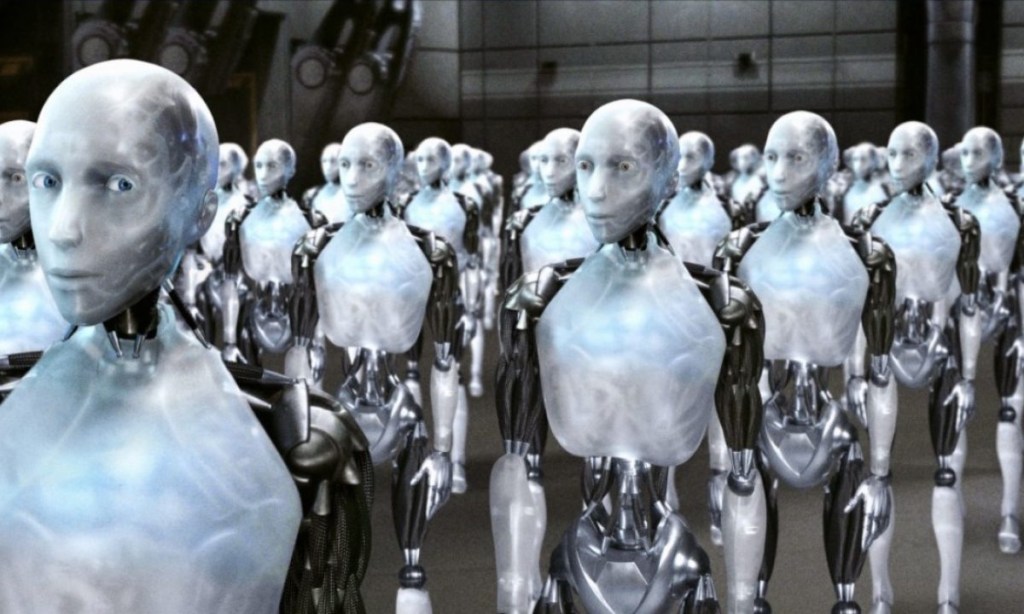
Just like the sci-fi novel “I, Robot," I mentioned earlier, the novel’s content is almost all about humans, and robots are just a way for them to express their morality. What is the meaning of such a title? What I want to ask is that when humans think they are talking about problems from the perspective of machines, they are still criticizing and commenting from a human perspective. So if one-day artificial intelligence writes a novel called “I, Human", will humans look at bionic people with the same eyes as they look at this book?
Cyborg
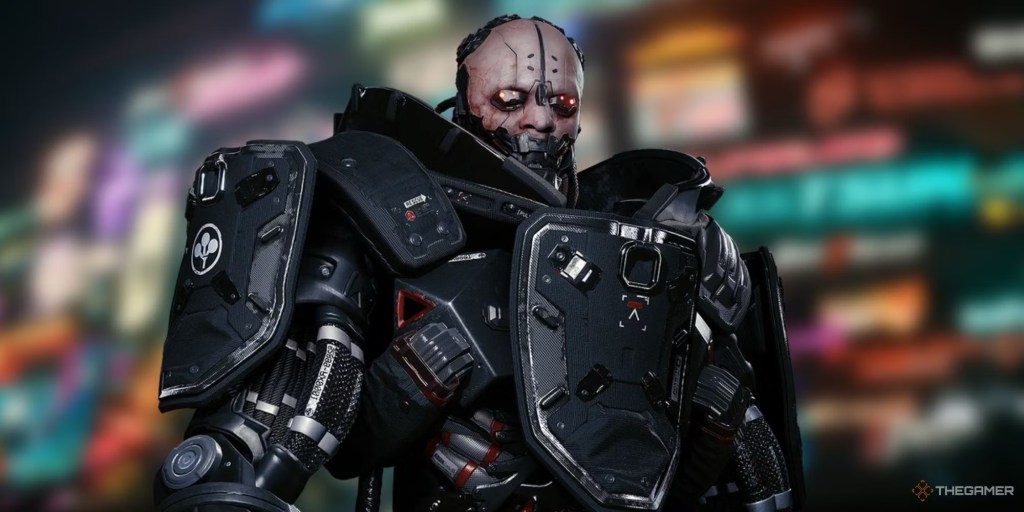
According to wikipedia, cyborg is the abbreviation of the cybernetic organism, which is a biological organism that integrates organism and biomechatronic, also known as “human-machine fusion." The term was first coined by Manfred Cline and Nathan Cline in 1960. Unlike bionics, biological robots, or bionic people, a cyborg is an artificial object made of inorganic matter, implanted or assembled inside or outside the body of an organism. Still, the thinking and actions are controlled by the organism. Usually, this is done to increase or strengthen the organism’s ability through artificial technology.
I want to mention the concept of Cyberpsychosis in Cyberpunk 2077 here. Cyberpsychosis is a general term for all anxiety-related mental and personality disorders caused by hardware implanted in the body and various behavioral modules, including software. Cybernetic implants are widespread in the cyberpunk worldview. They are partly for changing one’s appearance, just like the many individuals who have undergone cyborg transformations in appearance that often appear in neuromancers or for more powerful abilities. This concept is even more strongly reflected in 2077. Mechanical enhancements usually enhance Cyberpsychosis and, therefore, have a sense of loss of their identity, both to themselves and others. They begin to regard ordinary people and other creatures as weak and inferior. With their enhanced physical abilities and complete disregard for life, Cyberpsychosis are extremely dangerous to anyone who encounters them. Cyberpsychosis may eventually affect anyone who has undergone mechanical enhancements, but the less empathetic or mentally stable people are, the more susceptible they are.

This process of dissociation from humans is like a separation from humans. We can regard gradually changing from normal humans to cyborgs and becoming Cyberpsychosis as a dissociation between cyberhumans and human identities. Patients gradually lose the ability to connect with humans socially and emotionally and begin to see themselves as different from ordinary humans. This is also a process of changing progressively from humans to objects. This dissociation process can be seen as an example of object-oriented ontology. We can regard this process as a cruel evolution or degeneration of the process of objects separating from humans. As I said, when analyzing all technologies, the view that humans regard technology as a tool attached to themselves can be overturned, and technology can also be interpreted as an inhuman, simple object.
Low Life
Low-life refers to people who are considered morally unacceptable by the society they live in, including aggressive beggars, bullies, criminals, drug dealers, parasites, hobos, gangsters, people who frequently use foul language, prostitutes, pimps, liars, sexual predators, and thieves.
Typically, the word is used to express disapproval of antisocial or self-destructive behavior, often with disdain and ridicule—the use dates back to 1911. In the Western world, the idea has long roots in antiquity, when high culture was associated with the nobles at the top of the social hierarchy, who were respected in aristocratic-dominated societies. In contrast, low culture was associated with the ordinary people at the bottom of the social hierarchy, which included many poor people.
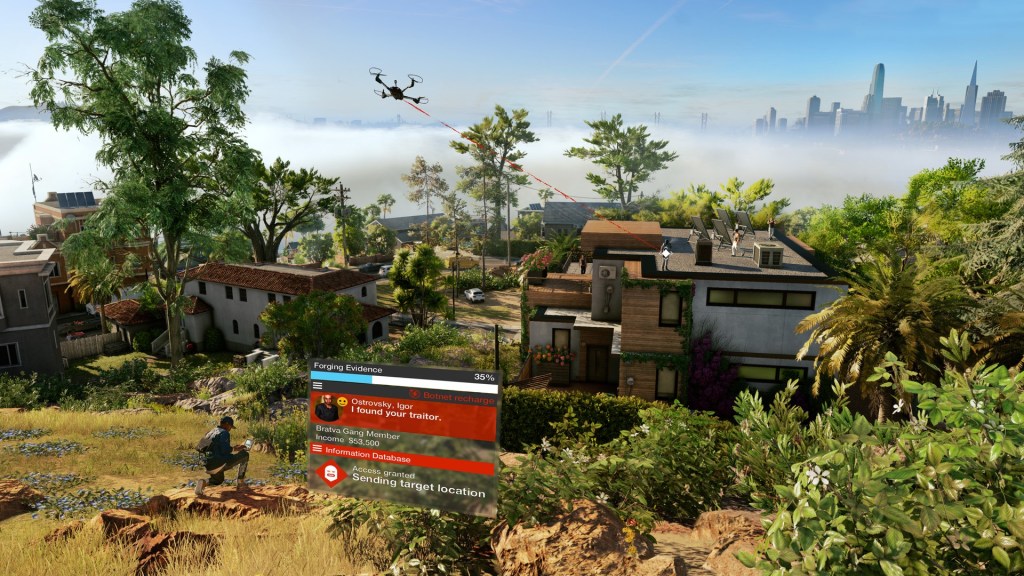
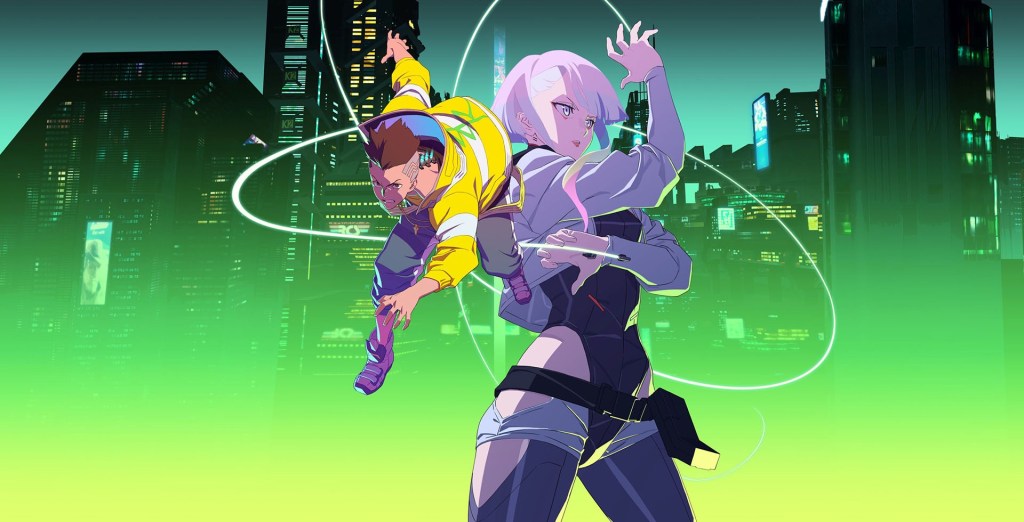
If we regard the society created by technology in the Cyberpunk world as an object, we can hear the pain and wailing of this object and see a bright and beautiful block on the surface but rotten inside. The first thing that comes to mind when thinking of the cities in the Cyberpunk world is always neon lights, high technology, and high-rise buildings. Still, this seemingly beautiful environment contains the pain an unequal society brings. Using Cyberpunk 2077 Edgerunner as an example, we can see what ordinary life in such a society is like.
The protagonist, David, is a person with excellent grades but low-income family conditions. When the animation begins, we can see him sitting in front of the washing machine in the first episode, but soon, the washing machine has no money to continue running, so he can only put on his own clothes because he has no second set of school uniforms, and then walk out of the apartment. Along the way, we can see homeless people sleeping on the list, hungover people vomiting, and crime scenes that no one has dealt with. David had no money to buy the latest genuine upgrade, so it caused the school system to be blocked. He couldn’t afford to pay the money, so his mother had to come to apologize. On the way back, they encountered a gang fight, and his mother fell. When the medical staff arrived, although they saw his fallen mother, they just said that this was not our client and left directly until they were sent to the hospital. He couldn’t afford medical insurance and couldn’t even visit his mother. He could only wait outside. After his mother passed away, he didn’t even have enough money to hold a funeral for his mother, so he could only go to the mobile crematorium. His mother’s ashes lay there as they came out of a vending machine. When he returned, he found that he couldn’t pay the rent for the apartment. The door was locked, so he could only climb through the window.
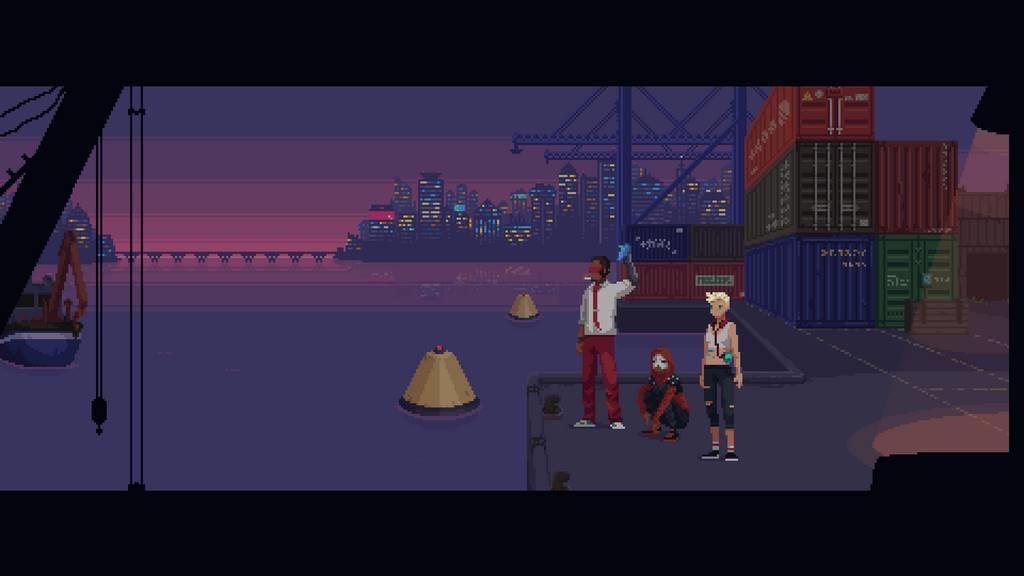
If we regard this social structure as an object, it can help us understand its components and internal mechanisms. Like a complex machine, the structure of a society is composed of various parts. In the cyberpunk world, the most critical element of this object called social structure is a mega company. This mega company has a monopoly on technology and life, which has led to a complete tilt and chaos in the social structure. They may cooperate with the regime to monitor the entire society, and the upper echelons and the bourgeoisie are like the gears of a machine, which are interlocked to promote the glamorous part of society. At the same time, this object is full of flaws because there is an uncertain part, that is, ordinary people, just like a machine with inherent flaws, which can easily lead to social inequality, instability, or conflict.
Although the theme of many cyberpunk works is the resistance of ordinary people against those high-ranking people in society, not many are successful. The power of an ordinary human being is fragile, while the other side is the party with power and rights. They crush ordinary people as quickly as stepping on a tiny insect. However, such courage is still admirable. Such stories are why these cyberpunk have been passed down to this day.
Conclusion
I don’t want to argue any point in this blog; I just want to look at something familiar from a new perspective. I want to analyze something familiar to me in a way that I am not familiar with, humanize the things that I take for granted, and look at them from the perspective of an object. If I can give you some inspiration and enlightenment and let the blog’s readers propose a new perspective and look at other things around them from a different perspective, it would be great. I like the experience brought by the cyberpunk style. Their protagonists are always human, not just human, but the emotions created by humans.
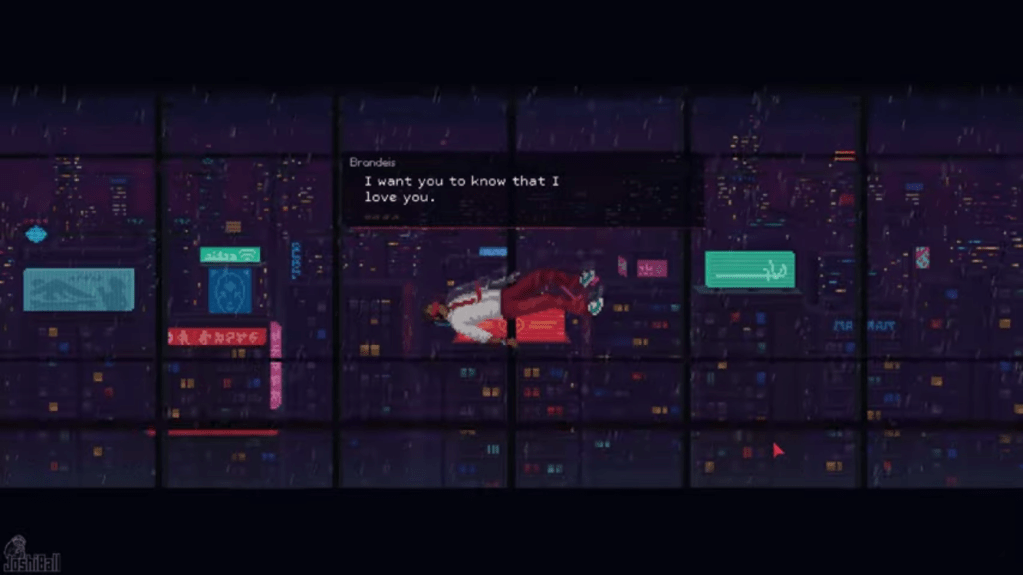
I love the ending of The Red Strings Club, when Brandeis falls off the building, and you have the choice to say I love you to Donovan, not about any corporate secrets, not about the revolution, just I love you.
I think that is what cyberpunk is about.
Also: Link to my own cyberpunk world
Sources
Works Cited
Charles Paulk. “Post-National Cool: William Gibson’s Japan." Science Fiction Studies, vol. 38, no. 3, 2011, pp. 478–500. JSTOR, https://doi.org/10.5621/sciefictstud.38.3.0478. Accessed 23 Apr. 2024.
Cohen, Julie E. “Cyberspace as/and Space." Columbia Law Review, vol. 107, no. 1, 2007, pp. 210–56. JSTOR, http://www.jstor.org/stable/40041711. Accessed 23 Apr. 2024.
Csicsery-Ronay, Istvan. “Cyberpunk and Neuromanticism." Mississippi Review, vol. 16, no. 2/3, 1988, pp. 266–78. JSTOR, http://www.jstor.org/stable/20134180. Accessed 23 Apr. 2024.
De Spiegeleire, Stephan, et al. “AI – TODAY AND TOMORROW." ARTIFICIAL INTELLIGENCE AND THE FUTURE OF DEFENSE: STRATEGIC IMPLICATIONS FOR SMALL- AND MEDIUM-SIZED FORCE PROVIDERS, Hague Centre for Strategic Studies, 2017, pp. 43–59. JSTOR, http://www.jstor.org/stable/resrep12564.8. Accessed 27 Apr. 2024.
ENGELKE, PETER. AI, Society, and Governance: An Introduction. Atlantic Council, 2020. JSTOR, http://www.jstor.org/stable/resrep29327. Accessed 27 Apr. 2024.
Johnson, Deborah G. “Technology with No Human Responsibility?" Journal of Business Ethics, vol. 127, no. 4, 2015, pp. 707–15. JSTOR, http://www.jstor.org/stable/24702822. Accessed 27 Apr. 2024.
Rikidōzan. Weblog post. Techno-Orientalism: Contrarian stereotypes and the ‘Japan Panic’, 22 Apr. 2049, transnationalhistory.net/world/2019/04/techno-orientalism-contrarian-stereotypes-and-the-japan-panic/. Accessed 23 Apr. 2024.
Senior, W. A. “‘Blade Runner and Cyberpunk Visions of Humanity.'" Film Criticism, vol. 21, no. 1, 1996, pp. 1–12. JSTOR, http://www.jstor.org/stable/44019023. Accessed 23 Apr. 2024.
 冰塊葬禮
冰塊葬禮 
發表留言