
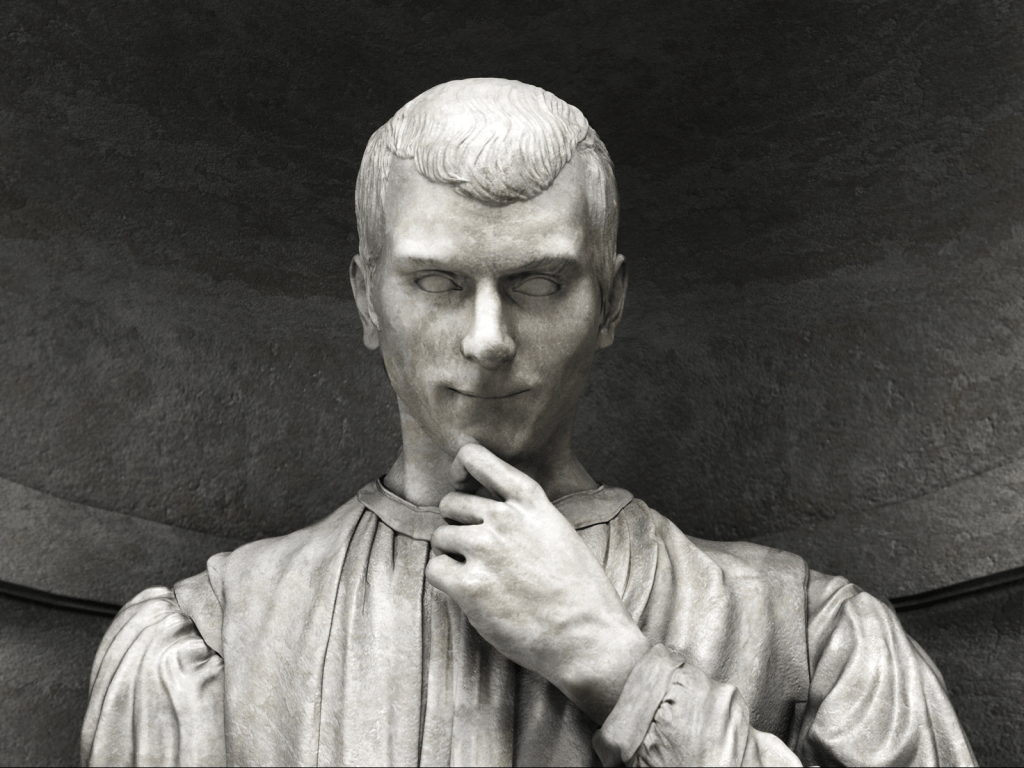
In The Prince, Nichole Machiavelli’s study of power, human nature, and practicality is profound. Because of its understanding of these topics, The Prince has a profound influence. After many years, these books are required readings for many monarchs and leaders, and they also have an important influence on ordinary people who are not in power and can still learn from them. So this blog wants to take a deeper look at why its analysis is still so influential in modern society. From a modern perspective, why this book, which has been around for hundreds of years, is still worth studying and learning from.
Power
Machiavelli has a profound view on how to gain and maintain power, especially in terms of maintaining power. The method he proposed is almost cruel but effective. In terms of maintaining power, for Machiavelli, maintaining it through fear is always more effective than maintaining it through love. As Machiavelli mentioned in the article when talking about kindness and cruelty, when faced with whether the monarch should be loved or feared: “It may be answered that one should wish to be both, but, because it is difficult to unite them in person it is much safer to be feared than loved" (Machiavelli 26). What a prince should do is to unite his subjects, and if he fails to achieve this goal, he should not be afraid of getting a bad reputation. When you set up the execution of the punishment in order to achieve your goal, it is only for the individual.
On the contrary, if you are too kind in pursuit of reputation, it may cause harm to the whole society. Excessive kindness represents a lack of preparation and excessive trust in others. The whole society is maintained by the idea of love, but in fact, human nature does not allow you to complete the establishment of such a bond. Instead, the bond is easily cut off at any time. Such an unstable relationship will affect not only the prince’s rule but also the entire country. A society built on fear will be more stable because it does not rely on trust and kindness as its foundation but relies on the fear of punishment to cause concerns, which will make the whole society more stable. For Machiavelli, maintaining power requires more rational judgment and thinking, rather than indecision.
At the same time, for Machiavelli, another critical aspect of maintaining power is maintainingmaintaining a good relationship with the people because the people are easilyeasily satisfied, and they expect not to be oppressed. It is more difficult to maintain power than relying on the powerful because they think they are equal and cannot be commanded. Relying on the people, a country is more stable, and a prince is more likely to maintain his power. The nobles are more cunning than the people and are more willing to oppress, while the people live with the prince and can still live well without the nobles. A prince should have clear rewards and punishments to maintain power. Those who are attached to the prince and contribute to the country should be rewarded, while those who try to overthrow the country and do not rely on the monarch should be used or guarded against and punished accordingly.
Human Nature
For Machiavelli, human nature is selfish and fickle. As she mentioned in her article: “Love is preserved by the link of gratefulness which, owing to the weak nature of men, is broken at every opportunity for their advantages" (Machiavelli 26). Human nature is fickle and easily influenced by the external environment and one’s emotions, and is untrustworthy. Everyone should consider their own interests first. Machiavelli’s view of human nature is cruel. People will betray the ruler for their own interests, but if they are in fear, they are less likely to rebel. Human selfishness makes love for anything unstable and fragile. Human nature is often fickle, greedy, and cowardly. The prince should be vigilant about human beings, deal with the people’s changeable emotions, adopt flexible strategies, and adjust his actions at any time to maintain influence and lasting control over the people.
practicality
Regarding virtues, Machiavelli proposed a very famous theory of beasts and humans: “It is necessary for a prince to understand how to use the ways of both the beast and the man" (Machiavelli 27). Machiavelli believed that all virtues should be beneficial to oneself, and you only need to believe that you have the corresponding virtues, and you do not need to complete them. In these aspects, Machiavelli follows a kind of utilitarianism. For example, generosity, for Machiavelli, if generosity does not make you praised in practice, it will harm you. Because this kind of generosity is extravagant, it will only consume too much money and increase the burden on the people. It will only lead to a few people receiving generosity while the majority will be exploited.
On the other hand, thrift can obtain high income, make the country stronger, and reduce the burden on the people. This kind of generosity will help everyone gain a better reputation. Any virtue should not be excessive. Whether it is kindness or mercy, these virtues are impossible to have, so for Machiavelli, evil deeds are sometimes necessary to achieve some goals. When keeping one’s word is not good for oneself, there is no need to keep it because human nature itself is evil. At the same time, for Machiavelli, a prince should let others do the things that need to be taken responsibility, but take on the things that are performed by favors personally. When doing evil, the evil should be done once, and when performing favors, it should be done in small amounts and multiple times. In these strategies, Machiavelli’s theory even looks evil, and any means can be used to achieve the goal. But in fact, these goals are to maintain the stability and prosperity of the country. These are legitimate national goals, not just for personal gain.
Influence
The Prince, as a book published in the 16th century, has a lasting influence on history, and it can still have an important impact on modern people today. Not only in politics, but the views put forward by Machiavelli and the logic behind his views can have an impact on leadership, life, and social interaction in modern society. These theories still have their place in modern corporate management or international diplomacy。
For example, as a leader, when maintaining the relationship between subordinates and oneself, one can make some flexible strategic changes through the methods mentioned in this book and have a more far-sighted vision to face the challenges that may arise in the future. In The Prince, Machiavelli also talked about how to avoid being hated by the people and why it is important not to be hated. These theories are useful not only for monarchs but also for leaders in maintaining the relationship between leaders and followers. Even these theories have the same effect on the social relationships of ordinary people because these theories are common and practical for how people avoid hatred in interpersonal relationships.
 冰塊葬禮
冰塊葬禮 
發表留言