Before telling all the stories, I must admit that the country where I was born is not a place suitable for women to survive. Looking at the thousands of years of history that has taken place on the Chinese mainland, we can taste a long-term patriarchy. In ancient dynasties, it was always possible to have wives and concubines. In history, there have always been different kinds of discipline for women, and this view has not changed much since the establishment of the new People’s Republic of China after the end of World War II. Stories of drowning and abandoning baby girls are so common that everyone talks about it. There has been a long-term oppression of women in rural areas of China because, in modern history, only giving birth of boys can be allocated with land to farm, so there is still a serious prejudice against women. They call women “money-wasting" and deprive women of the opportunity to study and work. In some remote areas, there is still human trafficking of women, abducting girls from the city and forcing them to give birth to children and become wives for themselves.
In January 2022, a blogger in Xuzhou, a city in eastern Jiangsu Province, posted a video of the chained woman on Douyin, which attracted public attention. In the video, a middle-aged woman stood in a brick house without a door. The weather was cold, but she did not wear a coat. A metal chain around her neck tied her to the wall. Eight children lived in the house next door with a man who claimed to be their father. The final version of the story, which came after a provincial government investigation, was that authorities said the woman’s real name was Xiao Huamei and that she had been trafficked from southwest China to Jiangsu in 1998. (Questions about whether this was her true identity have also emerged online but have been censored.) The provincial government investigation said Xiao Huamei was sold twice in a year, the second time to Dong Zhimin, who lived next door to the Dong family in the video. She gave birth to eight children in the following years. Even before she was trafficked, she had shown signs of mental illness; after she was found last year, she was diagnosed with schizophrenia and hospitalized, officials said.
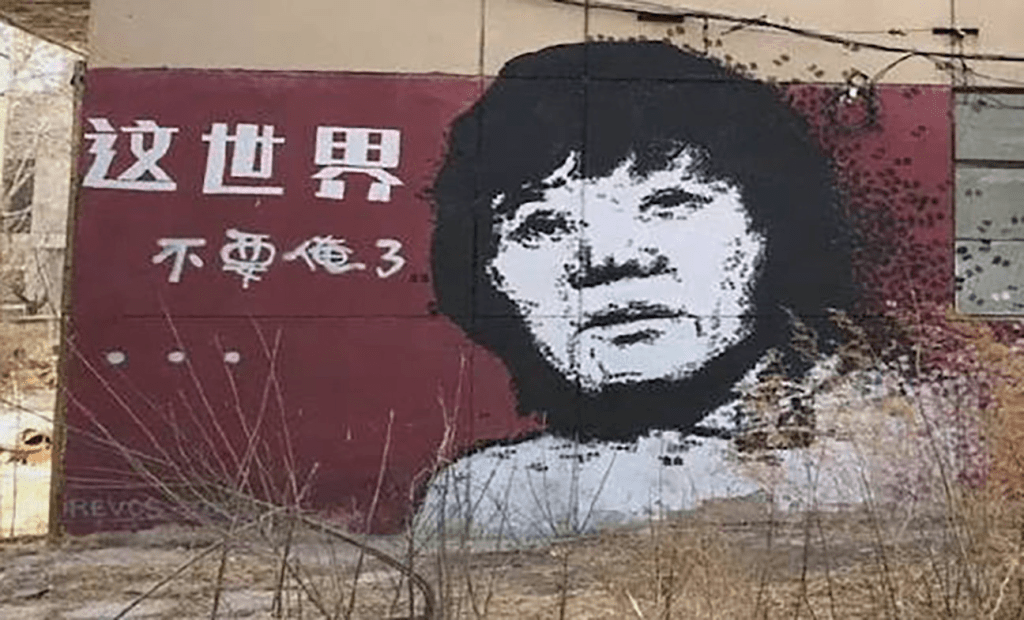
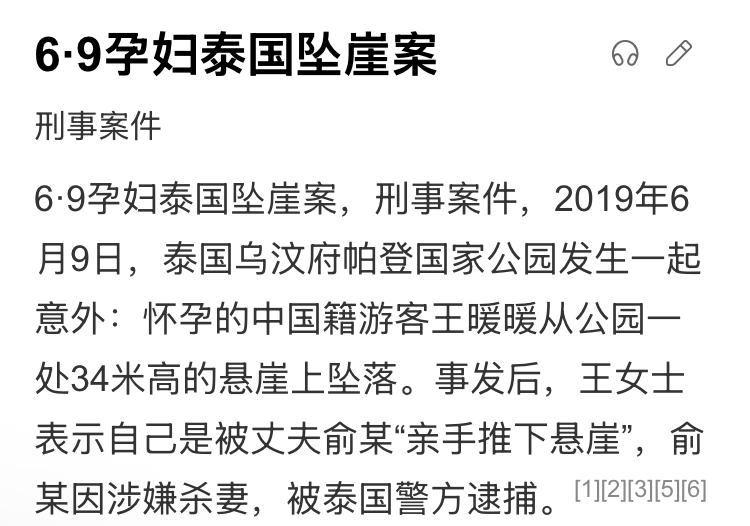
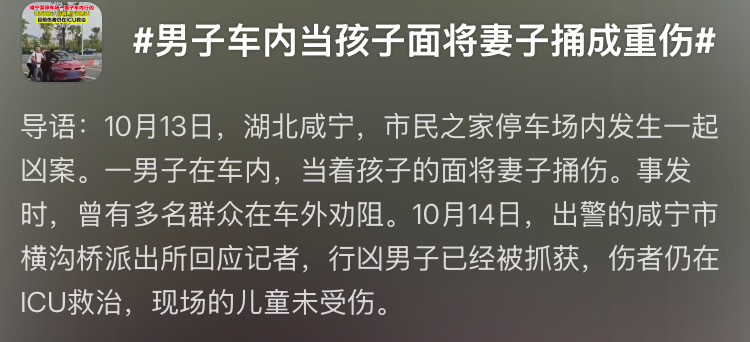
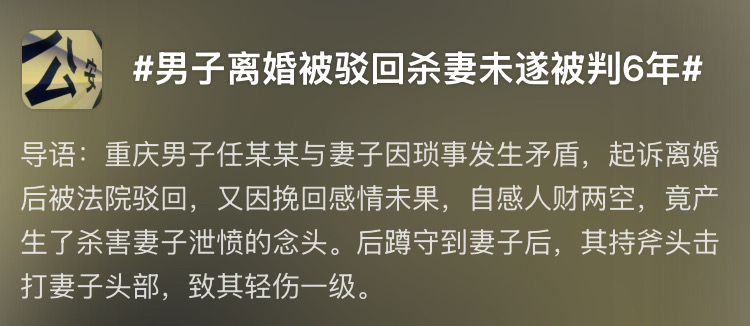
If all the women you know are angry, as we read in class, then Chinese women are the angriest group of people I have ever met. In many ways, they have reason to be angry. Chinese women are the group of people who suffer the most sexual harassment that I have ever known, and the sad thing is that there is no policy that is in their favor. With the emergence of the concept of a cool-off period for divorce in recent years, more women have found it difficult to escape the violence they have suffered in marriage. So this anger gradually turned into hatred, a general hatred of men as a group. The Internet has, in some sense, amplified similar hatred. More and more news about wife murders appeared on the Internet, and more manic men who abused women because of their emotions were talked about by Chinese women. In the end, many Chinese women came to the conclusion that Chinese men are inferior; they are murderers, rapists, or a collection of misogynistic emotions. A new group of feminists has emerged in China called “激女," which means radical feminists. They are women online who refuse marriage and childbirth and put forward a lot of radical terms to criticize the role of married women in a patriarchal society. The introduction of the 6B4T movement in China, the radical feminist movement in South Korea, spread to China through translation, further strengthening the radical action propositions such as anti-marriage or anti-childbirth.
Radical Feminist?
History
Radical feminism emerged in the 1960s and 1970s, along with the second wave of feminism. They believe that the root of women’s oppression lies in social structure, system, and culture, including marriage, education, and childbirth, and demand a thorough change in the social framework. They challenge the patriarchy in society, believing that this is the root of women’s oppression. They re-evaluate the role of women in marriage, childbirth, and family. Radical feminism seeks a thorough change, not only in the legal and institutional aspects but also in cultural concepts, family structure, and other deep-seated issues.
Modern Korea
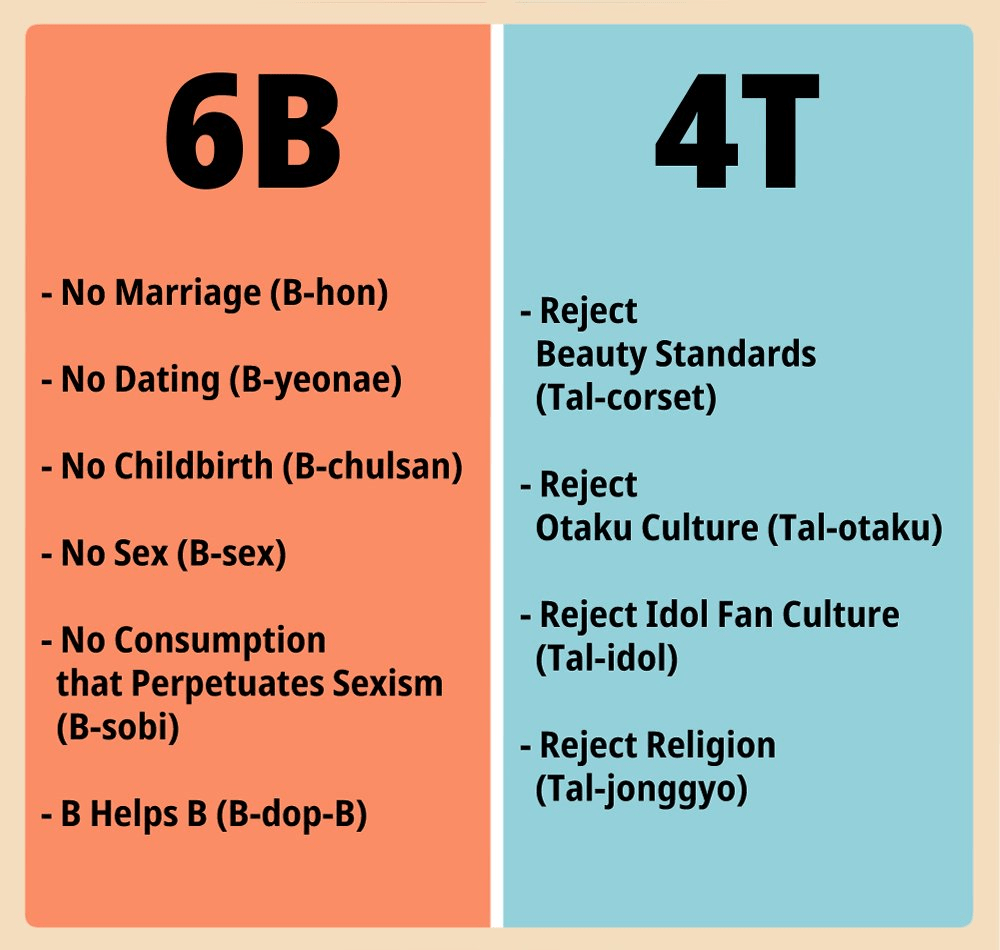
The 4B movement originated in South Korea, which means four “no’s": no marriage, no childbearing, no heterosexual relationships, and no sex with men. It was later expanded to 6B4T, adding two new principles: boycotting sexist products (비소비) and helping each other among 6B members (비돕비). In addition, 6B4T also opposes modern “corsets," the over-sexualization of women in Japanese otaku culture, religious beliefs, and idol culture.
TERF
The full name is trans-exclusionary radical feminist. TERF first appeared in 2008 and originally referred to a type of feminist who excludes transgender people. These people believe that transgender women are not women, that they cannot truly change their biological sex, and that they cannot truly experience some of the physiological conditions of biological women (such as menstruation, pregnancy, etc.). TERF also emphasizes that transgender people cannot and should not participate in women’s rights movements, exclude them from women, and oppose legislation to protect the rights of transgender people. Later, the meaning of TERF was expanded to include all those who oppose and exclude transgender people.
激女
You could say that some of the core consensus of this group is:反婚反育反沾男、反“服美役”、主张性别分离,anti-marriage, anti-childbearing, anti-male contact, anti-beauty, advocate gender separation. Then, from this point of view, they believe that all men are potential or active oppressors and perpetrators. Men should be eliminated, and the problem of offspring should be solved by technological development (artificial insemination, cloning technology, artificial womb, etc.). Only by centering on women and formulating social rules according to women’s characteristics and nature can society operate harmoniously, peacefully, and naturally in an orderly manner. They promote that men’s characteristics are inferior and women’s characteristics are superior. Women have better physical constitutions and longer lifespans than men. Men are born war initiators, women are pacifists, and they promote that women are superior to men from all angles.
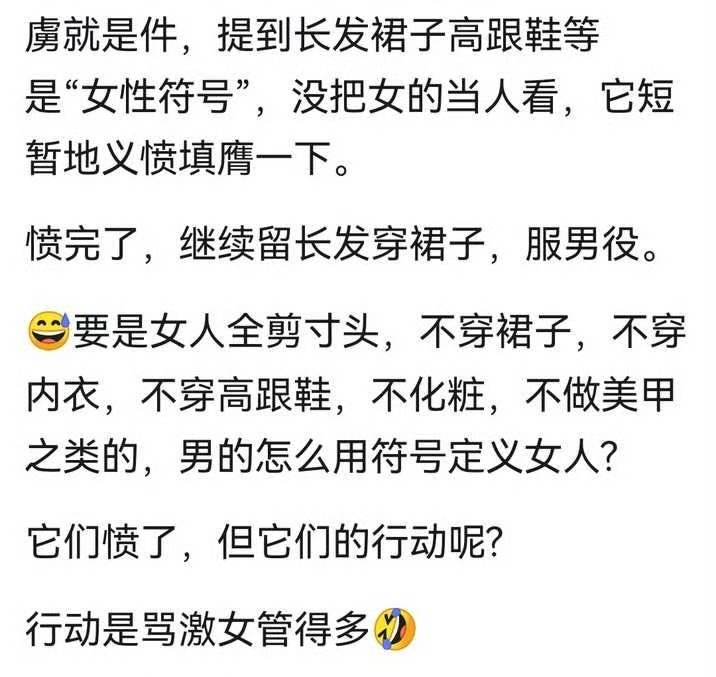
If all woman havea buzz cut, no skirt, no underwear, no high heels, no makeup, no manicure, etc., how can a man use symbols to define a woman?
They are angry, but what about their actions?
The action is to scold radical feminist cares too much.
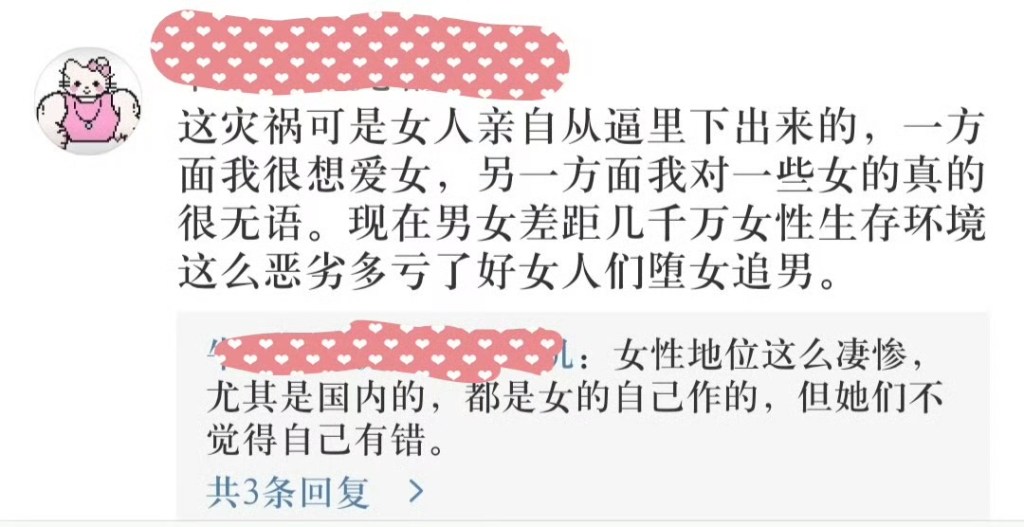
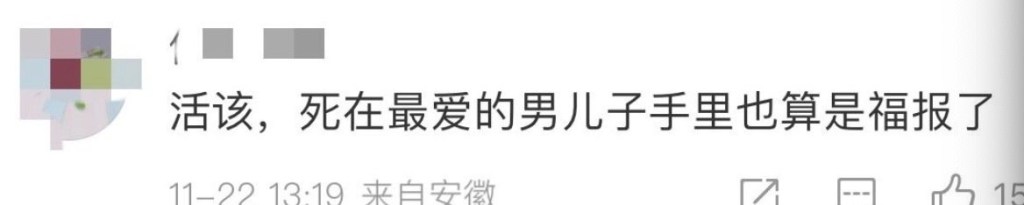
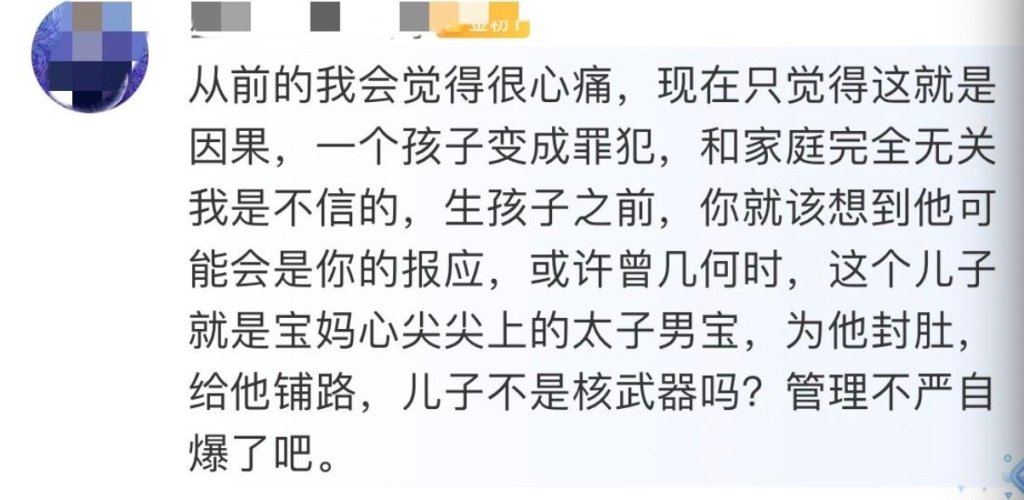
You can meet these people in many social groups in China, such as Douban, Weibo, or Xiaohongshu. Some people will cross the Great Firewall and speak on X or Reddit. They always have their own small groups, gathering to express their opinions together; for example, on Weibo, there is a special “toilet" culture where they anonymously post comments through an account to attack anyone they don’t understand. They have a unique language, the most common are“服美役“,”驴“,”沾男“ and so on. The meaning of these words is vague, and I almost do not know how to translate them into English. The language and concepts created by many Chinese radical feminist are almost full of filth. The concept is placed on sex, and they try to use sex to oppress others. They are not only full of malice towards men, they The malice will be even greater transferred to the female group, and any woman who does not conform to their style will be reviled and insulted. They call their behavior “beating women". Only by scolding these women and joining them can they achieve the feminist society they want. They are full of malice toward married women, women who associate with men, have sex with men, or women who like male celebrities or characters. At the same time, they extremely hate makeup and dressing up to look beautiful. In a sense, they hope that they can reverse their current gender status and become the oppressor. They are full of malice towards even their own mothers.
Word Explain
Before that, I want to explain the meaning of these words and introduce the main ideas of Chinese radical feminist.
服美役
The meaning of this word is changed from service, but the word beauty is added to it, which can be understood as Beauty Practice. It is widely used in discussions related to women’s rights in the Chinese-speaking community. It refers to all behaviors that sacrifice oneself (consuming additional resources (time, money, energy, etc.)) in order to cater to the aesthetics of social concepts. Beauty practice is not limited to appearance; it is also reflected in behavior. Examples are not limited to injections of hyaluronic acid to make a face look smaller, muscle removal to make legs look thinner, resulting in inconvenience in movement, and ballet dancing for visual effects, resulting in ligament rupture or toe injury, or deformed toes. Inner legs are considered beautiful. But more often, Chinese radical feminists discuss makeup, long hair, or wearing skirts. They promote short hair, loose clothes, and pants. From clothing, high heels, skin care products, and cosmetics to weight loss, grooming, and beauty salons, they all had harsh criticisms. They criticize all women who engage in behaviors that make them beautiful, believing that their ultimate goal is to be beautiful in line with the dictates of a patriarchal society.
婚驴
Marriage donkey, donkey sounds like women in Chinese. Of course, also includes any homophones. It can be understood as working like a “donkey" in marriage. It is a metaphor for married women who devote more time, energy and material to their families than men. Later, it refers to all married women. For them, married women are supporting a patriarchal society.
But what I want to say is that, opposing the institution of marriage does not mean opposing individual marriage. This is because patriarchy severely punishes unmarried women, and many times women have no choice.
沾男是不幸的开始?
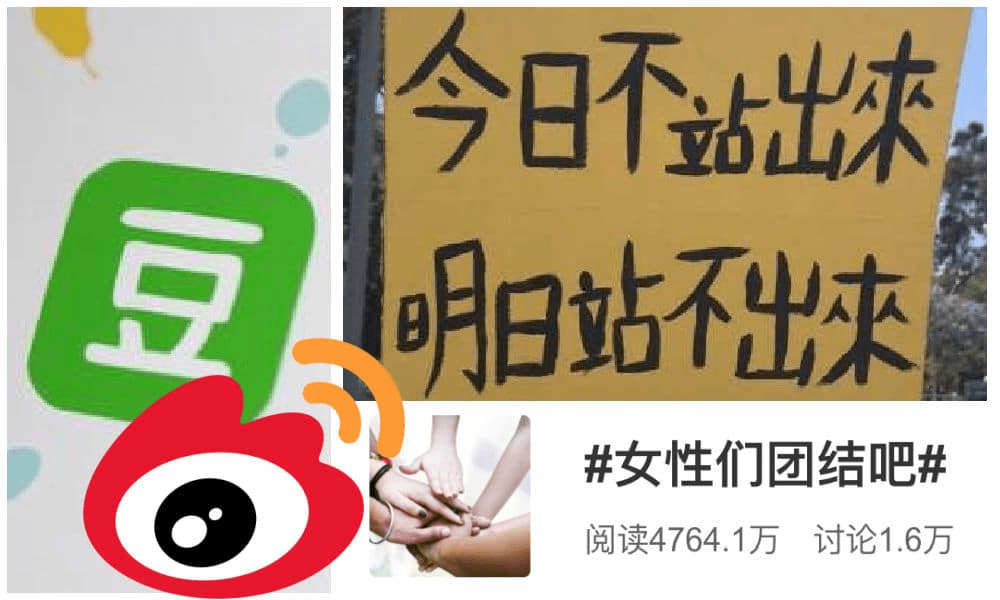
There is a discussion group on Douban called 沾男是不幸的开始; get in touch with Male is the beginning of misfortune. I often think about why there are groups that hold such binary views. I often talk about it with my girlfriends, question it, and in the end, I am only left with the annoyance that these groups hate males so much that they even conclude that the Y chromosome is an inferior gene, that they do not accept any sexual minorities, and that maybe only lesbians can be partially recognized, and that they spread the word about male homosexuality as a joke, a terrain to attack others. So they hurt everyone but themselves and ultimately did not do anything to accomplish anything. My friends and I have been attacked by these groups, and in the end, they pull the plug, delete our comments, and label us something like spiritual man. They attack freedom, and I initially thought they were talking about liberal feminism because they are the same words in Chinese, but they were not because some of them commented that it’s my freedom to dress how I want to, and so they considered the so-called “freedom" of being able to do what you want to do with what you have a stigma attached to it.
When I was doing some related research, I found an article about radical feminism in China that outlined the logic of their language, which made a lot of sense to me. In summary, there are three patterns in their language. The first is to occupy the moral high ground and expand the scope of their verbal attacks. Chinese radical feminist bloggers project the behavior of a single criminal or an individual male onto all men. After all, if one simply blames the criminals, the heat flow is often limited because the mainstream values of society are against such incidents, and few people speak up for the criminals. So, after elaborating on the incident, it is important to bring the core of the topic to the overall concept of masculinity, femininity, rising identity politics, and gender narratives. For them, all the pain they experienced was caused by men. This naturally puts women on the moral high ground, condemning men endlessly. In the end, men are put on the judgment seat and condemned so that men carry their own original sin in their bodies.
Such a pattern of narratives is akin to rape culture. The behaviors commonly associated with rape culture include victim blaming, slut-shaming, sexual objectification, trivialization of rape, denial of the prevalence of rape, refusal to acknowledge the harm caused by sexual violence, or some combination of these behaviors. Entire societies have been accused of rape culture. Radical feminists see rape as a means for men to keep all women in a state of fear and subordination; rapists are not just sociopaths but valued champions of patriarchy and masculinity, representing the will of the male power to keep women in fear as a way of making them more subservient to men, claiming that all men are beneficiaries, even if they have not committed the offense. The concept of rape culture was introduced by second-wave feminists. Critics of the concept have questioned its existence or scope, arguing that it is too narrow or that while rape is prevalent in some cultures, the very concept of rape culture may imply that not only rapists are at fault but that society as a whole contributes to rape. Critics of this line of criticism challenge the idea that only one party is at fault, pointing out that the perpetrator may be the primary wrongdoer and those who help to cover up the crime or harass the victim are accomplices, and thus, according to them, the wider society and culture can still be blamed for its collective impact on these individuals.
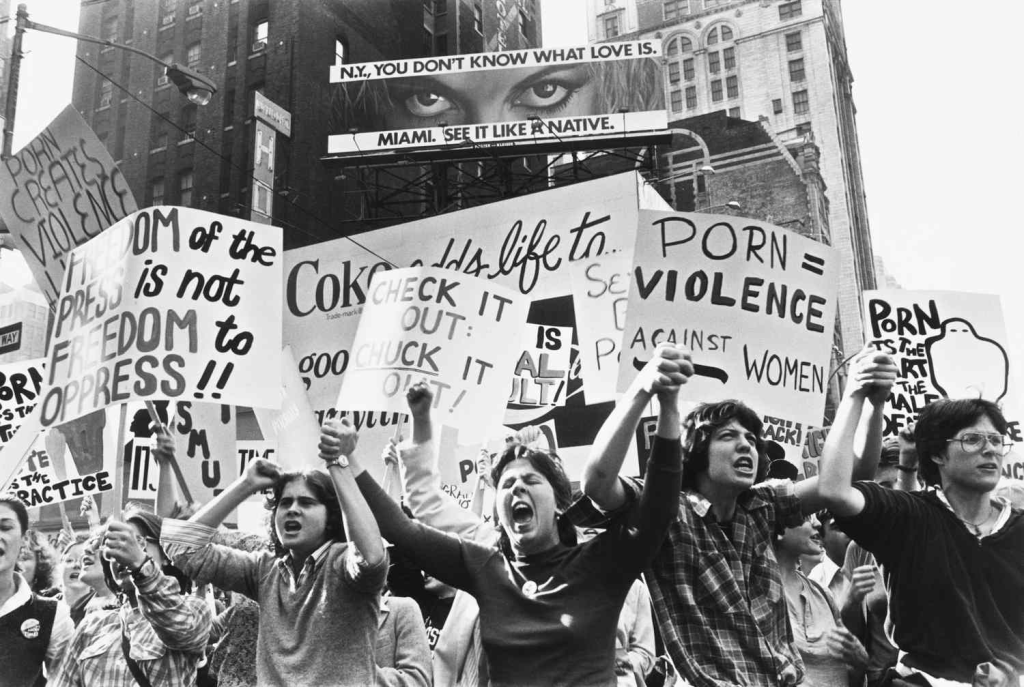
The second type of discursive logic looks for the male gaze in all things related to sex and expands and polarizes it. In a sense, they are extreme anti-pornography feminists who see sex as male domination of women and oppression of women. Hence the opposition to all forms of pornography, including novels, movies, newspapers and magazines, images, painting exhibitions, and other cultural representations. Women dressing boldly and releasing sexiness is to please men, women getting married is to become the vassal of the family, to become the free nanny of men, and women giving birth to children is to be used by the male-dominated society as a tool of reproduction, in short, no matter whether women are forced or “voluntary," in fact, it is the coercion of men to the woman, to the woman’s exploitation. At the same time, they use sex as an insult to women, so you can see them insulting married, male-loving, free-dressing women as Masturbation cups, bitches, sluts, trying to achieve their goals through humiliation. It is interesting to note that the same Chinese feminists sanctify women’s ability to procreate, loathing men’s emphasis on women’s ability to procreate while at the same time feeling that procreation holds the power of the human being, which they learn from korea.

The third category is the sanctification of female suffering. But ultimately, without thinking about the reasons why societies are formed, they attribute all the suffering and frustration they experience in life to male spontaneity. Talking about being anti-patriarchy, but using the underlying patriarchal logic to create cliques and cleanse all opponents. Create their own set of near-religious systems, and whoever does not support them is guilty.
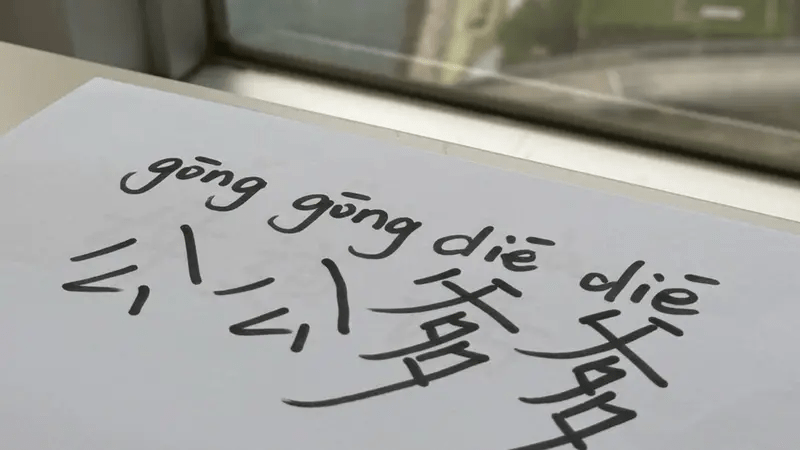
But how can it be that our world is still so binary when time has progressed so many years into the twenty-first century? The contrast of binary as a philosophical or sociological pseudo-proposition exists to this day. It becomes blurred, the genders become intertwined, and then one is left to think about more possibilities. It has been so long since women were given the right to vote, and China still remains a country that empowers no one. Ever since 1989, hardly anyone has dared to campaign on a large scale or protest, and no one has held up a sign with anything written on it to rebel against society. Feminism in China has become so distorted by this repressive social situation that it has become a brand new discipline for women, but simply reversing society and pitting the sexes against each other won’t solve anything. Radical feminists in China are now trying to gain power by reversing all words associated with men and changing any language that contains a derogatory word including women radical to a word with male radical. It’s just a shame that these behaviors have become even more confusing, to the point where some people are being corrected for just using OMG on Chinese social media platforms, saying that they should say Oh my pussy.
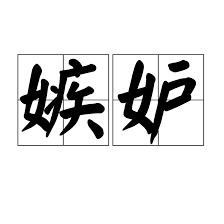
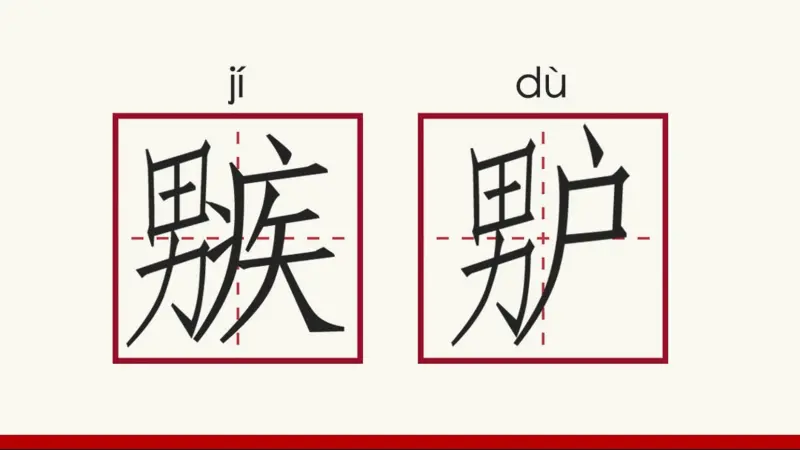
I’ve now become afraid to open Weibo, a Chinese social media site. I’m afraid to have any contact with my hometown, and I don’t even know if it’s going to change, turn around, or get worse. But I’ve always felt that feminism should be good for every woman, not be a brand new shackle, and if I have to force myself to change in order to be a feminist, and I have to go to the barber’s store every month to get my hair cut short so that I have to spend all this extra money, I’d rather give up on being a feminist on Weibo. From time to time, I want to preach to them that what we need to do is to fight for equal power, job opportunities, and wages; we need to fight for a voice, not to silence another woman.
Works Cited
Burgess-Jackson, Keith. “John Stuart Mill, Radical Feminist." Social Theory and Practice, vol. 21, no. 3, 1995, pp. 369–96. JSTOR, http://www.jstor.org/stable/23557193. Accessed 17 Dec. 2024.
Cheng, Xiaoyi. “6B4T in China: A Case of Inter-Asian Feminist Knowledge Negotiation and Contestation through Translation." Asia Pacific Translation and Intercultural Studies, vol. 10, no. 2, 4 May 2023, pp. 125-40. Taylor And Francis Online, https://doi.org/10.1080/23306343.2023.2241126.
Huang, Qiqi. “Anti-Feminism: Four Strategies for the Demonisation and Depoliticisation of Feminism on Chinese Social Media." Feminist Media Studies, vol. 23, no. 7, 2 Oct. 2022, pp. 3583-98. Taylor and Francis Online, https://doi.org/10.1080/14680777.2022.2129412.
Wang, Vivian, and Joy Dong. “Sentencing in China’s ‘Chained Woman’ Trafficking Case Revives Online Outrage." The New York Times, 7 Apr. 2023, http://www.nytimes.com/2023/04/07/world/asia/china-chained-woman-sentencing.html.
男疾男户、母道话……中国女性造字潮背后的语言争夺战. 16 Aug. 2024, http://www.bbc.com/zhongwen/simp/chinese-news-69290700.
 冰塊葬禮
冰塊葬禮 
發表留言